Iran and its Extraordinary Art Collection
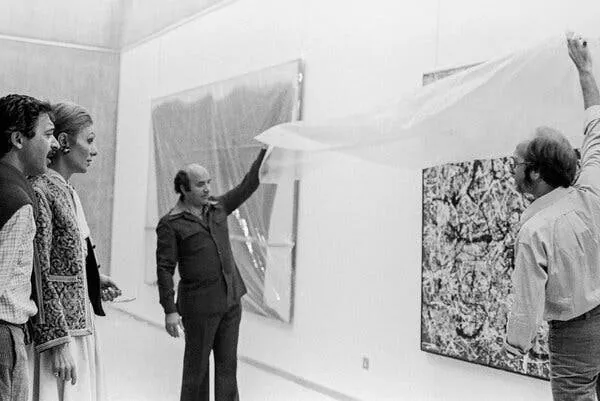
Monet, Pissarro, Toulouse-Lautrec, Degas, Renoir, Gauguin, Matisse, Chagall, Klee, Rodin, van Gogh, Picasso, Braque, Kandinsky, Magritte, Dalí, Miró, Johns, Warhol, Hockney, Lichtenstein, Bacon, Duchamp, Rothko, Man Ray: they are all here. The sensation of finding oneself in dialogue with such masterpieces is unique, as was the experience for Farah Diba when she exclusively admired her new acquisition: a 1950 Jackson Pollock, considered a seminal work from the artist's finest period.
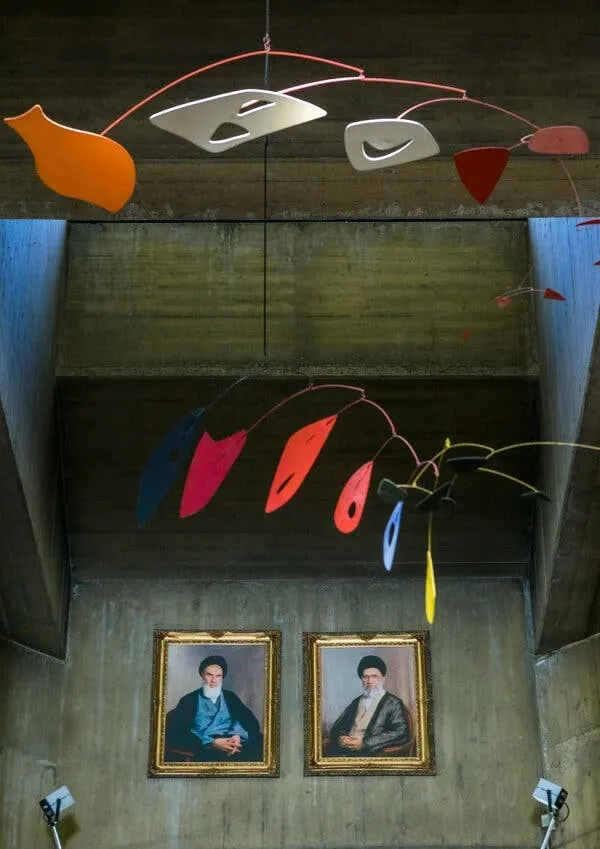
The contrasts are striking, almost surreal. Such as the Calder mobiles swaying languidly under the gaze of Ayatollah Ruhollah Khomeini, Father of the Iranian Islamic Revolution, and his successor as Supreme Leader, Ayatollah Ali Khamenei. Welcome: you are at the Tehran Museum of Contemporary Art, a building inspired by the Guggenheim Museum.
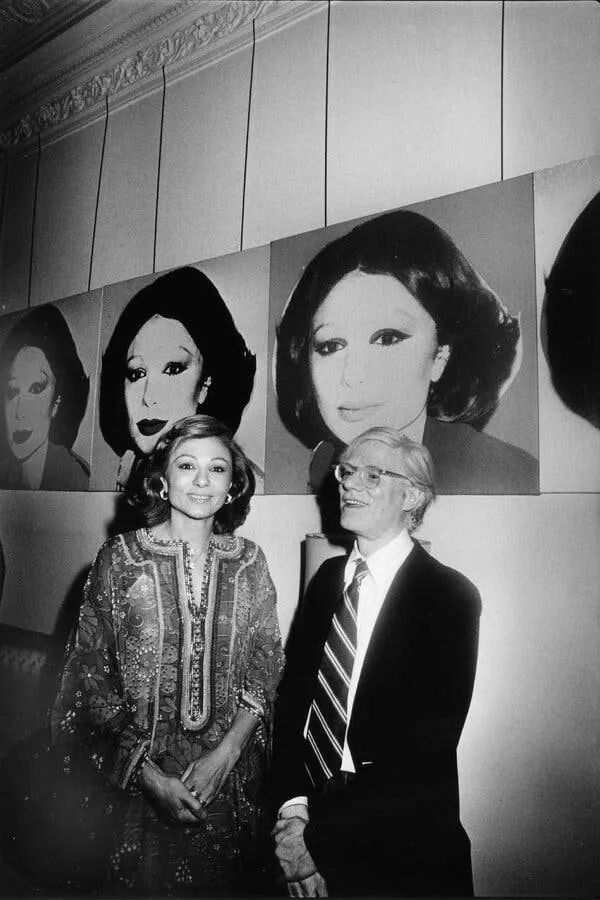
Conceived and commissioned by the then Empress Farah Diba Pahlavi, wife of Shah Mohammad Reza Pahlavi, the museum opened its doors in 1977. She chose her cousin, Kamran Diba, to be its architect and first director. Five quarters after its inauguration, the imperial couple had to leave the country for a "vacation," only to be swiftly supplanted and swept away by the Islamic Revolution. Between 1974 and 1977, however, the Empress and her teams were seized by a genuine buying frenzy, sourcing absolute masterpieces between Paris and New York. Picasso's "Open Window on Rue de Penthièvre," Giacometti’s "Standing Woman" and "Walking Man," Rothko's "Orange and Black" and "No. 2," Roy Lichtenstein's "Roto Broil," Munch's "Self-Portrait," Calder's "Orange Fish," a sumptuous pornographic triptych by Francis Bacon... This collection, now estimated at over $3 billion, is one of the most fabulous modern art collections in the world.
The new regime—which could have sold everything or even destroyed it all—immediately closed the museum's doors at the time and hid its treasures inside a concrete bunker. This lasted until 2005, when they organized a first retrospective while lending certain works to several European museums. Iranian curators are currently working on an exhaustive catalogue that will trace the entire history of this collection, expected to span no fewer than six volumes!